Top Low-Cost Willo Alternatives for Tech Hiring & Candidate Screening
Posted on July 26 2026 by Interview Zen TeamMost “low-cost” video interviewing tools stop at recording answers. That is the hard truth when you screen developers. You hit play on a two-minute clip and hear them talk through a take-home problem. You have zero signal on whether they can build software in real time. The budget was low, and the process was fast.
Now you are scheduling another 30-minute call to gauge basic technical competence. Willo pioneered simple one-way video for customer-facing roles or culture-fit checks. Engineering screening demands something different: structured workflows that surface coding ability before the first live conversation. This comparison covers seven Willo alternatives with real pricing, from Truffle at $49/month to enterprise-grade HireVue. Platforms that support resume pre-screening alongside async interviews.
Platforms that automate candidate reports for your ATS. And how to design a pipeline that flags strong engineers without burning recruiter hours on dead-end calls. The goal is not cheaper video capture. It is faster technical signal at scale. One-way async interviews drop your cost-per-screen to $0, but they miss the one metric that matters: actual coding speed under pressure.
Willo handles culture-fit clips fine, but it cannot test whether a candidate debugs a race condition. This breakdown covers seven platforms with real monthly prices. Truffle at [amount] and HireVue negotiates from there. You want tools that pipe results into your ATS and flag candidates who compile clean code. Cheaper platforms waste time if they push you into live calls just to measure ability. The goal is faster technical signal without doubling your calendar load.
Why Willo Now Costs More Than It Saves
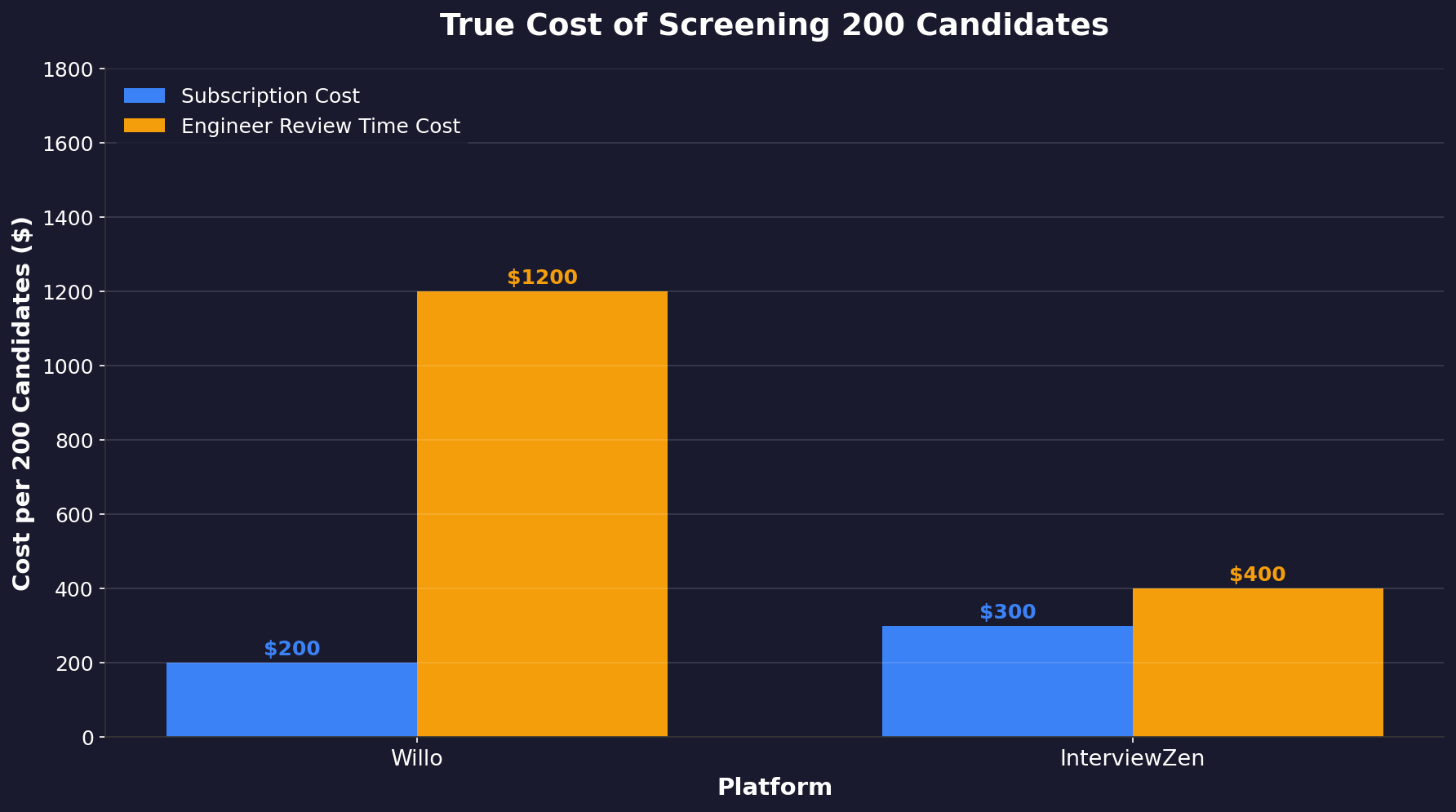
Willo’s cheapest paid tier recently jumped in price monthly. That’s a significant increase for the same video-only interview slots. Overage fees compound the problem. Each extra screening beyond your plan limit adds more cost per batch. A hiring round targeting 200 candidates can balloon before you schedule a single live call.
The Willo starter plan costs a monthly fee for asynchronous video alone. You get zero coding workspace or live debugging capability. There’s no way to evaluate raw problem-solving under pressure. You hear polished narratives about past projects but never watch candidates wrestle with an actual codebase. Standard video screenings reveal presentation skills more than engineering depth.
Candidates rehearse for these recordings just like they would for a YouTube tutorial walkthrough. For budget-conscious teams running technical hiring at volume, the real cost isn’t subscription dollars. It’s false positives that slip through unassessed interviews and burn engineering hours in follow-up rounds. A candidate who sounds brilliant on video often stalls the moment you drop them into an IDE with a real error stack trace.
For a single engineering role, recruiters can spend significant time watching and verifying async video responses that still fail to predict live performance. That’s time lost on other qualified candidates per week. Multiply that across 20 open roles this quarter, and the wasted effort quickly adds up.
The Hidden Tax of Budget Screening
That math stings most in the first ninety days.
A monthly subscription for Growth tier may feel steep, but losing a single misplaced hire costs most teams significantly when you factor in training, ramp time, and separation costs. Spark Hire’s base plan starts around a monthly fee. Breezy HR bundles its video screening at roughly a monthly fee. Neither includes unlimited interviews or priority support at those tiers.
The real sticker shock hits when your pipeline grows beyond fifty candidates per month. Consider what happens without structured pre-screening. You schedule twenty phone screens this week. Eighteen show up on time. Five sound promising enough to advance to technical rounds. Three bomb the coding challenge anyway. That’s three hires from sixty minutes of interviews each.
Ninety minutes spent per viable candidate, not counting scheduling friction and no-shows. Willo’s removal of its entry-level tier last year forced lean startups into a tough position: pay for features they might not need or revert to phone screening with all its inefficiencies. Many chose door number two and regretted it within weeks.
The comparison gets clearer when you map cost per completed evaluation against candidate quality outcomes. Platforms like VideoAsk offer lightweight asynchronous screening starting at a monthly fee for small teams. No coding assessments built but serviceable for initial behavioral questions if paired with manual rubric scoring. Hireflix runs at a monthly fee for twenty active positions and lets candidates record unlimited takes before submitting their final answer. A feature that reduces anxiety-driven disconnects compared to one-take-only systems.
Neither option replaces technical skills validation entirely, but each removes the most expensive step: paying hiring managers’ hourly rates for repetitive screening conversations that yield high rejection rates anyway. CodeSignal’s interview-as-a-service offering presents a different tradeoff altogether: pay per candidate assessed rather than a flat subscription fee. Teams interviewing sporadically may spend less annually than Willo’s year-long commitment. High-volume organizations hit break-even before subscriptions become cheaper than transactional pricing models.
Predicting your volume accurately remains the hardest variable. Optimistic headcount plans often underestimate actual throughput based on data from agencies handling many placements annually. Nobody talks about infrastructure waste either. Three separate screening tools across recruitment channels means three logins, three debrief workflows, three storage billing cycles. Teams consolidating onto HackerRank or Codility pay more upfront but eliminate duplicate administrative hours spent cross-referencing feedback between platforms that don’t communicate natively with each other or their ATS system partners like Greenhouse. Flexible pricing structures are publicly available through standard checkout flows intended mainly for self-service onboarding segments.
The Architecture Problem Nobody Mentions
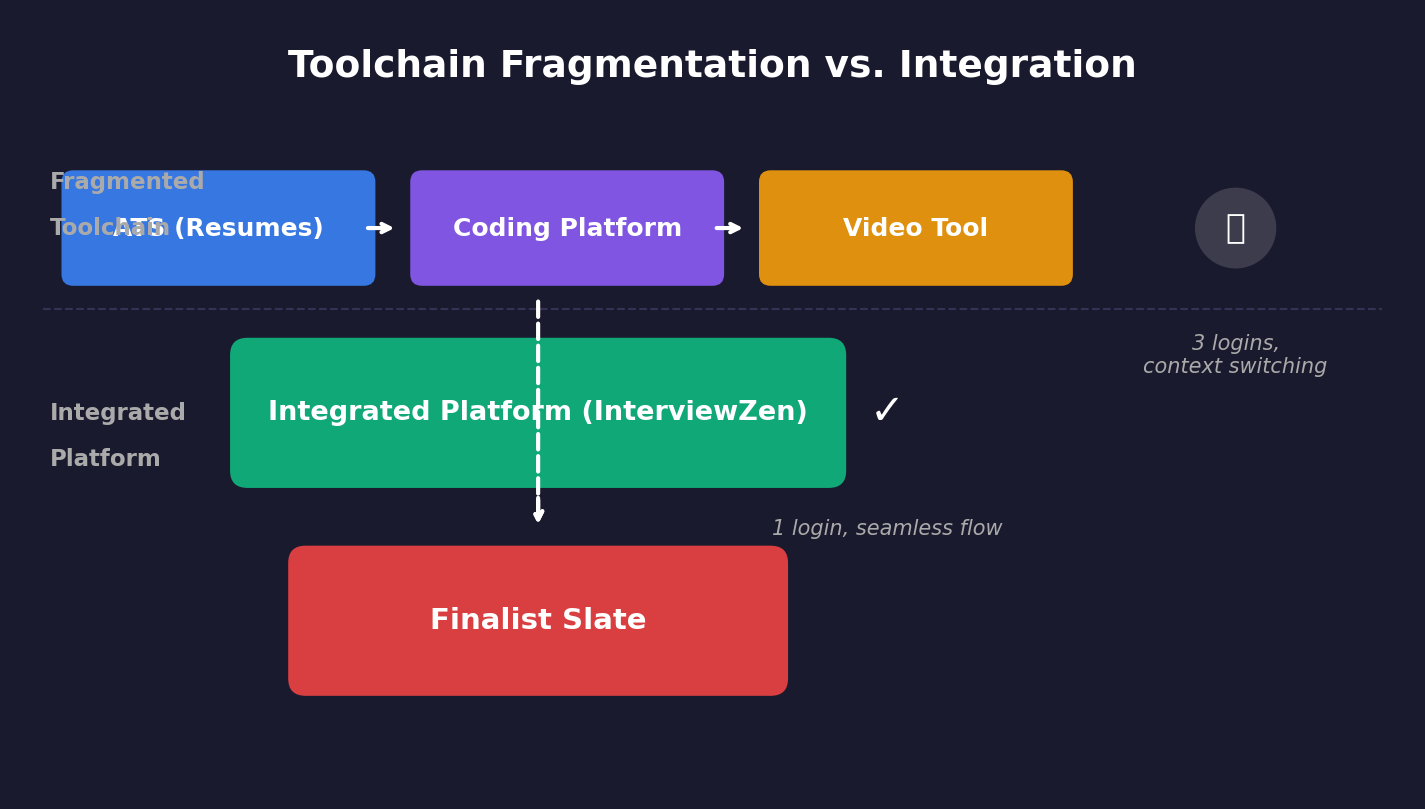
A recruiter toggling between an ATS for resumes, a separate platform for coding screens, and a video tool for behavioral interviews loses time per candidate to context recovery alone. Teams using three-plus screening tools take longer to deliver finalist slates than peers operating on two. The friction compounds with volume.
Most comparison articles treat platform count as a procurement decision. It is a throughput calculation. Every extra login is one more reason your best engineers withdraw before the technical round ever starts. The single-workflow alternative eliminates the gap between “this person passed algorithms” and “this person communicated clearly under pressure.”. That gap swallows promising candidates who test well but interview cold with unfamiliar interfaces each time they advance through disconnected systems managed independently by different stakeholders.
Those stakeholders rarely communicate across departmental lines without the dreaded weekly sync meetings nobody enjoys. Teams using integrated assessment pipelines shave time off their hiring cycle compared to manual coordination workflows still common across most organizations. Veteran recruiters accustomed to legacy methods now face diminishing returns against modern candidate expectations measured by metrics like time-to-hire and offer acceptance rates.
Evaluate program success beyond cost-per-hire. Build adaptive strategies responsive to demographic shifts, or risk obsolescence.
What Makes a Genuine Low-Cost Screening Tool?
Cap your budget at a reasonable range.
That’s the sweet spot where you get structured assessments and rubric scoring without enterprise bloat. HireVue starts at a certain price for teams under 50. Willo pushes past a certain price after your first 100 candidates. Compare total cost of ownership, not sticker price. A flat-fee platform with unlimited screenings beats per-candidate pricing every time.
Run the math: screening many applicants for one role costs on CodeSignal’s pay-as-you-go plan versus zero upfront but costs for manual resume reviews. FAANG-style rubric categories don’t need to be complex. Google uses four dimensions for phone screens: problem solving, coding ability, communication, and algorithmic complexity. Adapt that into a simple 1-4 scale across three categories: technical execution, reasoning clarity, and system awareness.
Most lightweight platforms ship these templates out of the box. Look for tools offering STAR-based behavioral scoring templates or Dreyfus-skill-level matrices for technical roles. Avoid platforms that force you to build everything from scratch. That’s how you end up spending more on setup than actual screening. Test your rubric before scaling it to a full pipeline. Score five existing employees across your proposed template and check for consistency between raters. If two reviewers disagree by more than one point on the same answer category, tighten your definition guidelines before cutting a single candidate interview slot.
Key Features That Make InterviewZen Stand Out From Basic Video Tools
Most video platforms treat interviews like FaceTime calls with a record button.
That approach undermines fair hiring. Structured scoring widens the gap. A simple Zoom call forces you to remember five candidates’ performances across three days. Human memory is unreliable. Unstructured recall introduces more bias into hiring decisions. Built-in rubrics change the game entirely.
Define criteria before anyone speaks: communication clarity, problem-solving approach, technical accuracy. Each response gets scored independently against those standards. No more “she seemed good” or “I liked his energy.” Those phrases are bias magnets. Replace them with numerical ratings on specific dimensions. The async workflow matters more than most teams realize. Candidates record answers to written prompts at their convenience. No scheduling conflicts, no rescheduling nightmares.
Career changers love this approach because bootcamp graduates and returning professionals often freeze in live pressure environments. Async removes that hurdle completely. “I failed my first two tech screens because of nerves,” one bootcamp graduate told me after switching to async assessments. “Finally someone gave me the space to show what I actually knew.” The structured interview kit deserves its own mention. Pre-built question libraries cover behavioral (STAR method), system design (whiteboarding alternatives), and technical categories.
Pulling from these saves hours per candidate pipeline. One hiring manager reported cutting preparation time significantly using pre-vetted questions aligned to seniority levels. Key insight: Combine async screening with your structured rubric for first-stage filtering, then reserve synchronous calls exclusively for final-round deep dives. Companies screening over 50 applicants per role see the biggest ROI here. Time saved per hire cycle when replacing unstructured video calls with scored async workflows. Consistency kills discrimination better than any diversity training program ever could.
Consistency Scales When Cost Doesn’t
That time savings compounds fast.
A team screening many candidates recovers significant recruiter hours annually. Time that shifts toward quality conversations rather than logistics. Structured screens don’t require expensive platforms. The core mechanics work identically whether you use specialized software, Google Forms, or even email threads with rating rubrics attached as PDFs. What breaks is consistency: one recruiter uses 1-5 scales while another writes unstructured notes.
The question banks matter more than the tool storing them. Write five behavioral questions tied directly to your role’s required competencies. “Tell me about a time you disagreed with product decisions” for PM roles, for instance. And commit every evaluator to the same prompts. Rating anchors prevent drift. Define what a “3” looks like in concrete terms: “Provided two specific examples of conflict resolution using the STAR format.” Abstract scales invite bias; anchored scales force evidence.
Score each candidate immediately after their response, not at day’s end when memories blur. Recruiters who batch evaluations late in the week show higher variance between raters on identical responses, according to internal studies from several large tech firms. Ready to move beyond basic async videos.
Keep Reading
- How to Ace “Tell Me About a Time You Failed” – A Behavioral Prep …
- How to Answer “Why Do You Want to Work Here?” in Biotech Interviews
- The One Meta Interview Question That Determines Whether You Get Hired
The takeaway is stark: cheap screening costs more than you think. Willo’s price tag for 50 interviews isn’t the real expense. It’s the dead-end calls, the lost hours reviewing video without code, and the false negatives from candidates who talk well but deliver nothing in a compiler. Seven alternatives exist at every budget level. But picking one won’t fix a broken pipeline. Before you buy any tool, write down exactly which signal proves a candidate can build. Is it live debugging? Or a ten-minute async coding problem with a whiteboard? Then let the platform follow.